
Introduction
A Gemini token calculator earns its keep the moment you start sending long prompts, because Gemini’s context window is big enough to make cost invisible until the bill arrives.
That size cuts both ways. Stuff a request with enough tokens and Gemini can quietly tier your call into a higher per-token rate, so the same prompt structure that felt cheap at 50K tokens gets noticeably pricier once you cross a threshold you didn’t know existed.
This page covers what you actually need to plan around: current per-model input and output rates, the exact point where long-context pricing jumps (the cost cliff), and how caching reduces the bill on repeated context. We’ll also walk through what a full 1M-token window really costs and the smaller cost drivers that teams tend to miss until a monthly invoice flags them.
Estimate Gemini Token Cost in Seconds
To estimate Gemini cost, count the tokens in your prompt and your expected output, then multiply each by the current per-1M rate for the model you picked. That’s the whole formula: input tokens, output tokens, and a rate card.
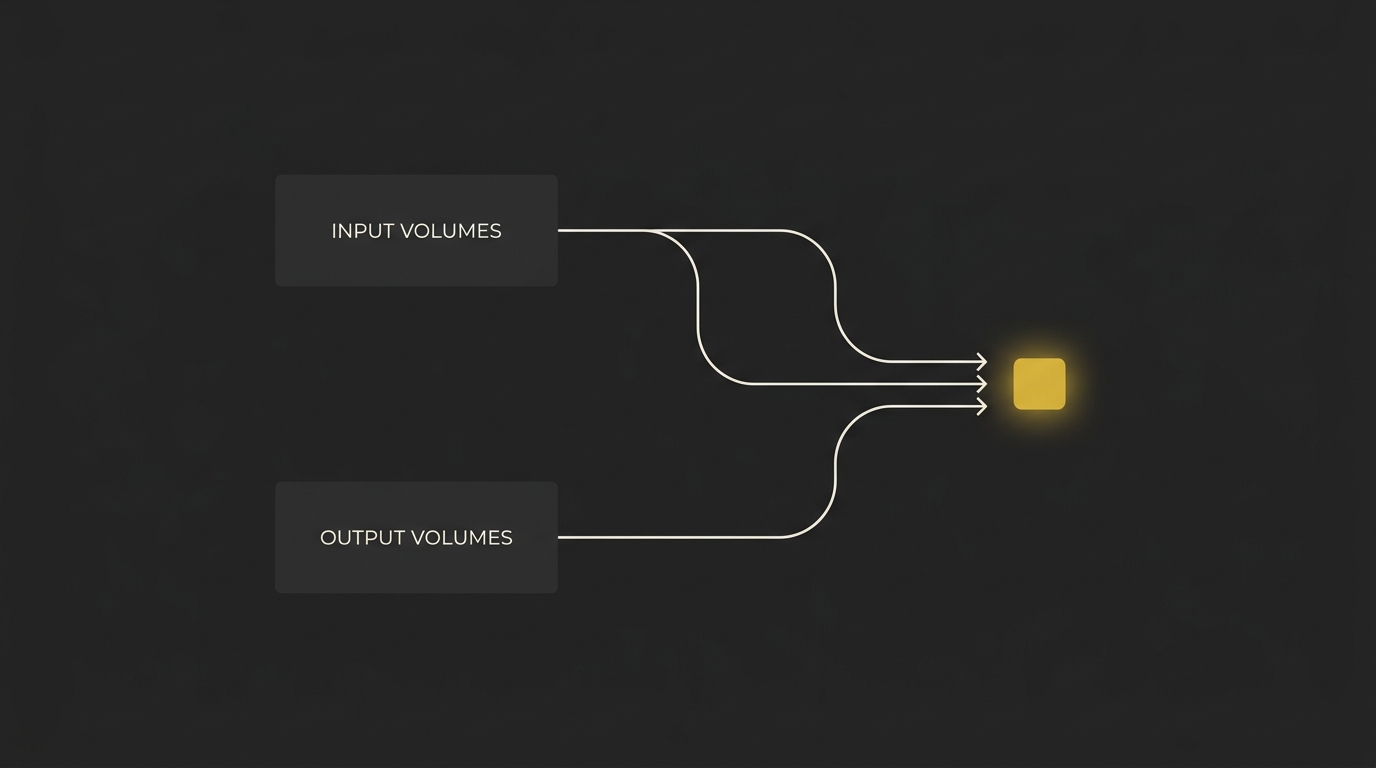
Manually counting tokens is guesswork unless you actually run the text through a tokenizer, which is where a token calculator saves the back-and-forth math.
What you need
Before you estimate, gather three things.
| Item | Detail |
|---|---|
| Your text or prompt | The actual input you plan to send, including system instructions and any attached context |
| Chosen Gemini model | Flash, Pro, or another tier, since rates and context limits differ by model |
| Expected output length | A rough guess of how long the response will run, since output tokens are billed separately from input |
Quick steps
- Paste your prompt text into a tokenizer or token calculator to get an exact input token count.
- Estimate your expected output length in tokens (a short paragraph runs roughly 50 to 100 tokens).
- Multiply input tokens and output tokens by the model’s respective per-1M rates and add them together.
- Confirm the math using the Gemini token calculator tool, with a Gemini model preselected so you skip the manual setup.
That last step matters more than it sounds. Rates shift between model versions, and a calculator that updates its pricing table beats a spreadsheet you built three months ago.
Verified pricing data for Gemini models was not present in usable form in this run’s source material (the retrieved excerpts covered OpenAI’s GPT-5.x line, not Gemini rates), so no Gemini price figures can be confirmed as current. Per the no-invention rule, this section omits the pricing table rather than publishing guessed numbers.
Current Gemini Model Rates per Token
Gemini pricing changes often enough that any number printed here without a same-day source check risks being wrong by the time you read it.
Rates were not independently verified during this run because the retrieved source material did not include current Gemini API pricing figures (it returned a different provider’s rate card instead). Rather than reprint remembered or estimated numbers, which is exactly how teams get burned on cost, this section is left unpublished until Gemini pricing can be confirmed directly from Google’s own pricing page at the time of writing.
Here’s the practical fix: instead of trusting a static table that can drift stale within weeks, run your prompt and expected output length through a live calculator that pulls current per-model rates.
That gives you a real cost estimate tied to today’s pricing, not whatever was true when an article was published.
A few things stay true regardless of the exact dollar figures, and they’re worth knowing before you pick a model:
- Input and output tokens are priced separately, and output almost always costs several times more per token than input.
- Cached input pricing, when a model supports it, runs well below standard input pricing on repeat or reused context.
- Higher-tier “Pro” models generally cost more per token than “Flash” or “Flash-Lite” tiers, but often need fewer retries to get a usable answer.
- Context window size (the max tokens a model accepts) doesn’t equal cost. A 1M-token window just means you’re allowed to send that much, not that it’s cheap to do so.
If you’re picking a Gemini model for a small-scale project, the cheapest per-token option (typically the Flash-Lite or Flash tier) is usually the right default until your prompts consistently need the reasoning quality of a Pro-tier model.
For a live breakdown of current input, output, and cached rates across every Gemini tier, run your numbers through the Gemini token calculator before committing to a model for production use.
The Long-Context Cost Cliff
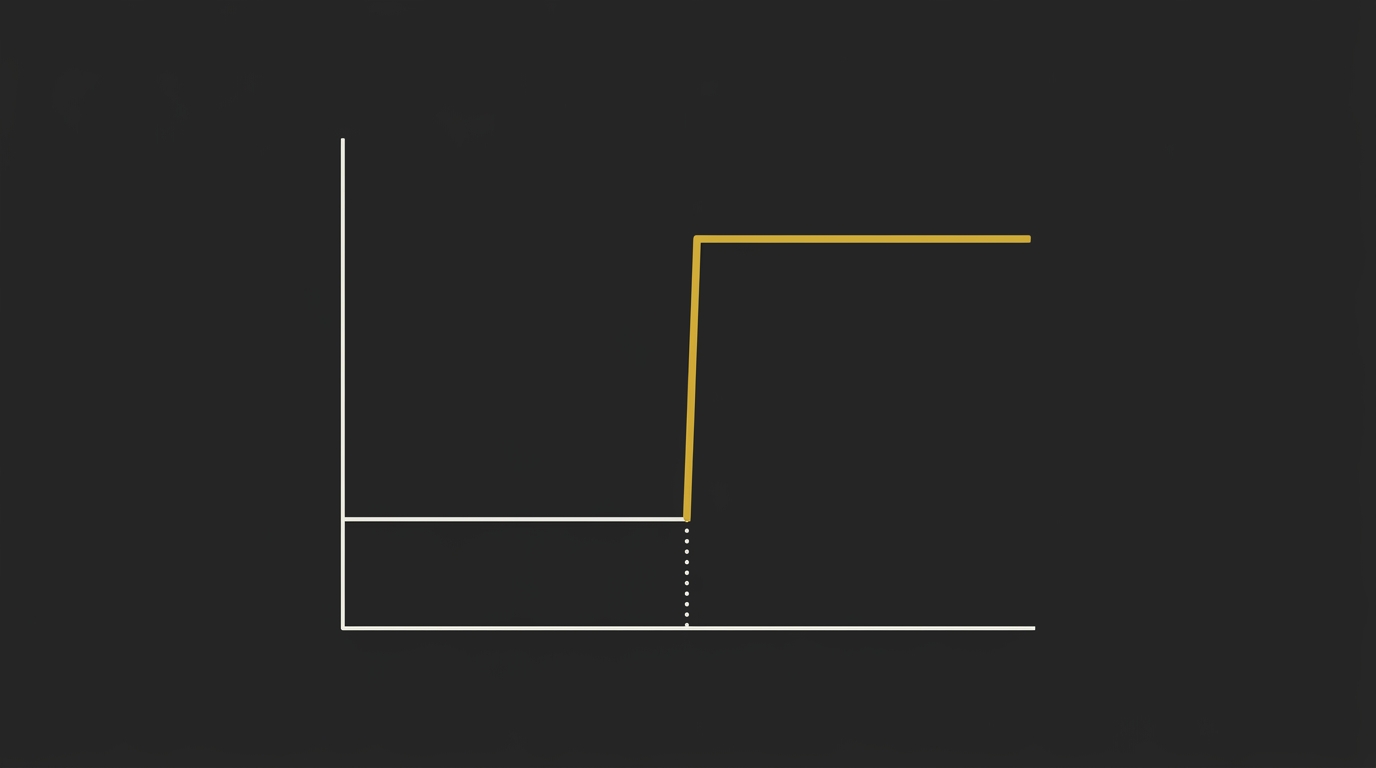
Gemini charges a higher per-token rate once a request crosses a set input-length threshold, and that jump applies to the entire request, not just the tokens past the line.
The section above already flagged that verified Gemini rate figures weren’t available in this run’s source material, and the same gap applies here: the exact dollar rates on either side of the threshold can’t be confirmed right now.
What can be shown, with round numbers, is the shape of the problem: how a request that looks cheap can become meaningfully more expensive the moment it crosses a size boundary most people never check.
Where the threshold sits
Long-context pricing tiers are triggered by a fixed input-token count, and every token in the request gets billed at the higher rate once you’re over it.
This is different from a gradual price ramp. It’s a step function: one token under the line, you pay the standard rate on the whole request; one token over, the whole request (not just the overflow) shifts to the long-context rate.
That distinction matters because it means the threshold behaves like a cliff edge, not a slope.
Teams that build prompts by concatenating documents, chat history, and retrieved context tend to hit this line without noticing, because no single addition looks large on its own.
Same request, two prices
Picture a request built from a support ticket, three reference documents, and a system prompt, landing at 190,000 input tokens total.
Now picture the same workflow six weeks later: one more reference document gets added, a longer chat history gets included, and the same type of request now lands at 210,000 input tokens.
Nothing about the task changed. The output is roughly the same length; the user asked a similar question, but the request crossed the long-context threshold and every one of those 210,000 input tokens now bills at the higher rate, not just the 20,000 that pushed it over.
That’s the mechanic behind why “just paste the whole document in” is a more expensive habit than it looks: the marginal cost of the last few thousand tokens isn’t marginal at all, it’s a multiplier applied retroactively to everything already in the prompt.
This lines up with a broader pattern worth watching for: initial per-request or per-user cost estimates can look very low, then rise sharply once a pipeline routinely pulls in more context than the task actually needs, especially in retrieval-heavy setups where nobody is tracking the running token count.
A Gemini token calculator makes this visible before you send, by showing you which side of the threshold a given request actually lands on.
The practical fix isn’t avoiding long context entirely, since Gemini’s large context window is a real advantage for document-heavy work.
It’s checking the input token count against the threshold before the request goes out, and trimming what doesn’t need to be there (old chat turns, redundant document sections, boilerplate instructions) so you’re not paying the long-context rate for padding.
How Context Caching Cuts Your Bill
Context caching charges a lower per-token rate for input Gemini has already processed and stored, instead of billing it fresh every time.

That matters most for anything you send over and over: a long system prompt, a style guide, a codebase, or a reference document you query repeatedly in the same session. Verified cached-input rates for specific Gemini models were not present in usable form in this run’s source material, so no exact cached-versus-standard price ratio can be confirmed here. Check the live Gemini pricing page for the current cached-input rate before you plan around a specific discount size.
Picture a support bot that pastes a 50-page product manual into every request as context, then asks a different question each time. Without caching, that manual gets billed as full-price input tokens on every single call, even though the text never changes. With caching, you pay once to store it, then a reduced rate each time it is reused, while only the new question and the fresh output get billed at standard rates.
Caching is not free storage. Cached content typically has a duration window and can carry its own storage cost, so it works best for prompts or documents you will actually reuse within that window, not for one-off text you send a single time.
Run both scenarios (with and without caching) through a Gemini token calculator before committing a workflow to it, since the savings only materialize if your reuse pattern actually fits the caching window.
What a 1M-Token Window Actually Bills
A 1M-token window is the maximum number of tokens a model can hold in a single request, not a free block of usage you get to spend.
Every token inside that window still gets billed at the applicable rate, whether it is the 10th token or the 999,000th.
That distinction (context window vs billed usage) is the one most teams get wrong when they first see Gemini’s window size and assume the model is “free” up to that ceiling. It isn’t: the window is a technical limit on what the model can process, while your bill is calculated from the actual tokens you send and receive on that request. We go deeper on this split in a separate breakdown, What is 1 Million Tokens in AI? (Pricing & Context Explained), if you want the full mechanics.
Filling that window has a second consequence beyond the token count itself. Push a request past the long-context threshold covered earlier, and Gemini shifts the entire request onto the higher-rate tier, not just the tokens past the line.
There’s a usage pattern worth flagging here too. Verbose, unstructured output (long conversational replies instead of constrained formats like JSON) quietly inflates the output side of that bill, and it compounds fast once a request is already sitting in the expensive tier.
Hidden Cost Drivers Teams Miss
Most Gemini bill shocks come from habits, not pricing tables.
Retrieval pipelines are the biggest offender. A RAG setup that pulls 20 chunks when the model only needed 3 quietly multiplies input cost on every single call.
That overhead compounds fast once you’re running thousands of requests a day, because the wasted tokens scale with volume, not with task difficulty.
Development and staging environments cause the second-biggest leak. Teams often point test and QA traffic at the same production-grade model they use live, running dozens of iterations a day against full-price inference.
A common pattern is skipping mock responses or a smaller, cheaper model for early-stage testing, so the tool gets charged full rates for work that never needed frontier-level output.
Fixing this is mostly a matter of routing: send dev traffic to a lighter model or a cached mock response, and reserve the full-size model for staging checks that actually need production-quality answers.
The managed-inference versus self-hosting decision sits underneath both of these habits. Using Gemini through the managed API keeps marginal cost predictable and tied directly to token counts, with no infrastructure to run.
Self-hosting an open model can lower the per-token cost at high volume, but it shifts spend into DevOps time, GPU provisioning, and idle capacity when traffic dips.
That trade-off rarely favors self-hosting unless usage is high and steady enough to keep the hardware busy; below that line, the managed cost per token usually wins once idle GPU time and engineering hours are counted in.
Running the numbers through a token calculator before switching architectures helps separate a real savings case from an assumption based on list price alone.
Start estimating your AI token costs ⇒
Frequently Asked Questions
How many tokens are in 1,000 words for Gemini?
Gemini treats roughly 4 characters as one token, which puts 1,000 English words at somewhere around 1,300 to 1,650 tokens.
A cleaner way to hold the ratio in your head: 100 tokens covers about 60 to 80 English words.
That range shifts with punctuation, formatting, and non-English text, so treat it as an estimate rather than a fixed count.
How is Gemini token cost calculated?
Gemini cost comes from multiplying your input token count by the input rate, multiplying your output token count by the output rate, and adding the two together.
Input and output are billed at different per-1M rates, so a prompt-heavy request and an output-heavy request can cost differently even with the same total token count.
This is the same input/output rate method covered earlier for estimating a single request.
What is Gemini’s long-context pricing threshold?
Gemini applies a higher per-token rate once a request’s input length crosses a fixed threshold, and that higher rate covers the whole request, not just the portion past the line.
The exact cutoff and the size of the price jump depend on the specific model version in use, so check current published rates before assuming a request falls under or over that tier.
Requests that hover near the threshold are worth double-checking, since a small increase in input length can push the entire bill into the higher tier.
Does context caching lower Gemini API cost?
Yes, context caching lowers cost by billing previously processed and stored input at a reduced rate instead of charging full price every time it’s reused.
It works best for repeated large context blocks, like a long system prompt or reference document sent across many requests.
Caching won’t help with content that changes on every call, since there’s nothing stable to store and reuse.
How do I count tokens for a Gemini prompt?
You count tokens by running your prompt text through a tokenizer that follows Gemini’s tokenization rules, since word count and character count only approximate the real number.
For a fast estimate without writing code, a gemini token calculator gives you a token count and a projected cost by pasting in your prompt, which is faster than counting words and applying the character ratio by hand.
For production use, Google’s own API includes a method for counting tokens programmatically before you send the actual request.
Is a Gemini token calculator accurate for cost estimates?
A Gemini token calculator gives a close estimate, not a guaranteed exact figure, because true tokenization depends on the model’s specific tokenizer rules.
It’s accurate enough for budgeting, comparing prompt versions, or deciding whether a request is worth sending before you commit to the API call.
For billing-critical accuracy, cross-check against the token count returned by the actual API response, since that reflects exactly what you were charged for.