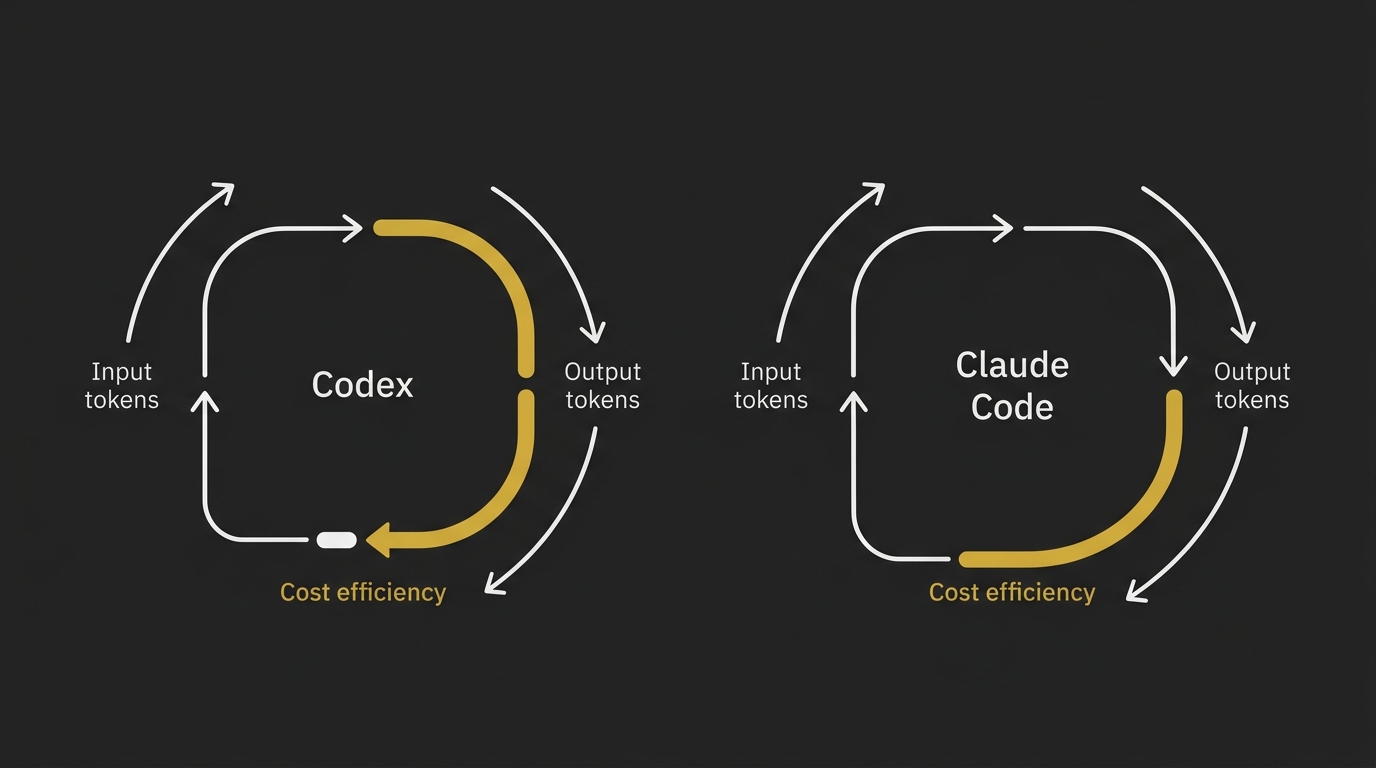
For a solo developer or indie founder spending their own money, Codex vs Claude Code is a cost-per-finished-task decision: what one real coding job costs to complete inside each agent setup, at a quality level you’d actually ship. Benchmark screenshots and forum vibes don’t pay the invoice, but per-run arithmetic does, and it takes minutes to price before you build.
So this page looks at them both through the numbers that matter in practice: the cost formula for an agent run, a worked example of the same task in both tools, the difference between plans and API spend, and which workload shape each agent fits best. The whole point is simple: estimate first, then build, because reconstructing a surprise bill after the run always takes longer.
Which Is Cheaper, and How to Decide in One Minute
It depends on your workload shape: the cheaper option is the one that finishes the job in fewer billed turns. For agents, the real number is cost per finished task, because turn count, resent context, and cache behavior drive the bill more than the headline token rate.
| Workload shape | Cheaper pick | Why |
|---|---|---|
| Light or bursty usage | Depends on plan fit | Monthly limits and session style matter more than list price |
| Heavy interactive daily use | Codex | Commonly perceived as stretching day-to-day usage further |
| Long autonomous background runs | Depends on completion efficiency | Fewer turns and stronger cache behavior usually decide it |
| Price-sensitive at the entry tier | Codex | Entry-tier value is often perceived as more generous for daily work |
The short answer
The short answer is that neither tool is always cheaper. If you’re asking which is cheaper, Claude Code or Codex, the useful answer is: pick the one that gets your actual coding task done in fewer loops, with less repeated context, at the quality bar you’d accept.
A simple price-per-million comparison misses the bill that agents actually create. A model can carry a higher posted rate and still come out better when cache behavior is working, and the session finishes in fewer turns.
To estimate your AI token cost, use our free estimator.
Where each one wins on cost
Codex looks better when your usage is frequent, interactive, and budget-aware at the entry tier. Field experience also points to a familiar split: once quality and cost get close, the better fit often comes down to repo reliability and long-task behavior on one side, versus economics and speed on the other.
Claude Code looks better when a stronger run saves retries, re-prompts, or cleanup work after the task. That is why the right comparison is per-run cost, because the better sticker price can still lose once the session gets long.
The Real Cost of a Task Is a Per-Run Number, Not a Per-Call Rate
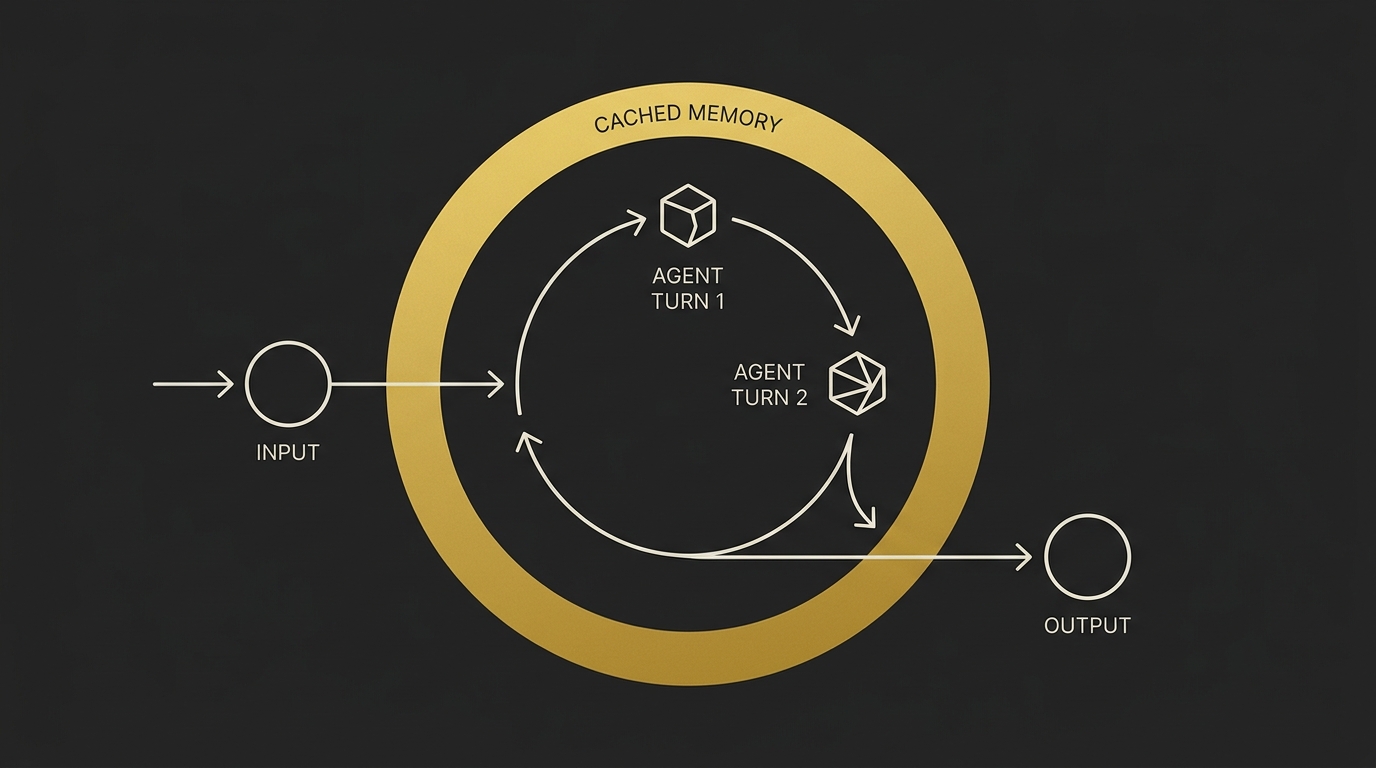
A coding agent prices a run as repeated turns through the same working context, plus output generated across the full session. That is why the honest number for comparing tools is per-run cost: one finished task can involve several passes, repeated context re-sends, and very different cache behavior from one model to the next.

Per-call
What rate cards show
Input tokens plus output tokens for one API call.
Per-run
What agent budgets need
Turns multiplied by re-sent context, adjusted by cache hit rate, plus output across all turns.
Cache hit rate
The cost swing factor
Higher hits shrink what gets billed again as the agent loops through the same task.
50x spread
Observed on one six-model run
A near-total-cache-hit model finished an agentic task for under one cent while a nominally cheaper rival landed far higher.
The agent-run cost formula
The agent-run formula is: turns × context re-sent per turn, adjusted by cache hit rate, plus output across all turns. That’s the number that maps to a finished task, and it’s a different calculation from a single API call.
Each variable matters:
- Turns: how many times the agent thinks, reads, calls tools, edits, and checks work.
- Context re-sent per turn: the prompt, files, instructions, and prior conversation carried forward each time.
- Cache hit rate: how much of that repeated context gets billed at the cached rate instead of as fresh input.
- Output across all turns: every generated response, patch, plan, and tool-related text produced during the run.
So if you only look at input and output for one call, you miss the real bill. For agents, the cost grows across repeated tasks inside the same session, because the same context can be carried forward again and again.
Why the cache hit rate decides the bill
Cache hit rate decides the bill because repeated prefix context is where agent runs spend money fastest. When the agent keeps revisiting the same codebase, instructions, and tool state, every cache hit reduces how much of that context gets billed again on the next turn.
A measured six-model comparison against real OpenRouter logs showed how big this effect gets in practice: one model with near-total cache hits finished an agentic task for under one cent, while a model with a cheaper headline token price and no visible cache discount cost about 50 times more on the same passing work. That makes one point very clear: for production tasks, price per million tokens is a weak shortcut.
And this is why raw rate cards mislead people. A model can look cheap at the per-call level and still land higher session cost once repeated context starts compounding.
For the underlying drivers, see what factors influence the pricing of AI tokens.
The Harness Tax: Why a Typo Fix Costs Almost as Much as a Refactor
The harness tax is the fixed context each agent turn resends before the real instruction starts. Measured on Codex CLI, that preload is roughly 16,000 to 26,000 input tokens per turn, and a community cost breakdown puts the fixed portion at about 73% of each call. So when an agent runs in your terminal, most of the bill can arrive before it even reads the new sentence you typed.

That is why small jobs often price closer to big jobs than users expect. A one-line typo fix, a quick rename across files, and a broader refactor all pay the same context toll on that turn, because the working state gets shipped again, either way. The task changes, but the fixed overhead stays in the room.
So the headline per-token rate misses what actually decides spend. The number that matters is what a finished run costs after repeated turns, resent context, and output across the whole session, which is also why agentic AI token usage climbs fast once a tool loop starts. Price the workflow, not the single call.
What Each Tool Is and Which Models It Runs
OpenAI Codex is OpenAI’s coding agent across CLI, IDE, and cloud surfaces, while Claude Code is Anthropic’s terminal-first agent built around your local environment. For cost, the first thing that matters is simple: the default model and the per-token rate card drive the bill, and output tokens usually cost 3 to 5 times more than input.
That pricing asymmetry is why response length hits the budget faster than prompt length. A long instruction block is usually cheap compared with a long generated diff, review, or explanation.
OpenAI Codex
OpenAI Codex is a coding agent available through a CLI, IDE extensions, and cloud workflows tied to a ChatGPT account. The supplied material describes it across local and hosted surfaces, with most async work happening in cloud sandboxes.
The current source material says local Codex sessions use GPT-5.5 by default, while cloud and code-review flows use GPT-5.3-Codex. It also lists broad surface coverage, including CLI, IDE extension support, web, mobile, desktop app, and a ChatGPT app sidebar.
Claude Code
Claude Code is Anthropic’s coding agent for terminal-first work with direct access to local files, shell, and git context. The supplied material also places it in IDE plugins, web access, and related app surfaces, but its core shape is still local and terminal-led.
The current source material says Claude Code is tuned for Anthropic models including Opus 5, Opus 4.8, Opus 4.7, Sonnet 4.6, and Haiku 4.5, with Opus 5 described as the default in the cited material. For a cost comparison, those models matter because model choice changes both token rates and how much output the agent tends to produce.
The per-token rates, checked live
The exact per-million input and output rates are the numbers that belong here only when they are verified from pages retrieved in this run. That verification is not present in the supplied inputs, so this section keeps the rate mechanics to the supported fact: output tokens are the expensive side, commonly around 3 to 5 times the input price.
From the brand evidence, that gap is material across major providers: Claude Opus 5 is listed at $5.00 per million input and $25.00 per million output, GPT-5.6 Sol at $5.00 input and $30.00 output, and Gemini 3.7 Flash at $0.75 input and $3.75 output. If you want the simplest mental model before plan math, price the output first.
How Codex and Claude Code Price the Cache Differently
The cache mechanic is where repeated work starts to split: Anthropic prices a cache write at 1.25x base input and a cache read at 0.1x, so the same cached prefix costs 12.5 times more on a miss than on a hit. OpenAI’s published pricing takes a different shape, with discounted cached input and no separate write fee, which changes the economics of long agent sessions and revisit-heavy work.
On Anthropic, that multiplier lands on the full reusable prefix: system instructions, tool definitions, project context, and early turns. Cache is built in order, tools first, then system, then messages, so if you edit a tool definition mid-session, the whole prefix below that point gets re-billed at the higher write rate on the next turn.
That’s a real bill, not theory. In one measured audit of 568 Claude Code sessions across 40,977 turns over 90 days, cache re-sends averaged about 330,000 tokens per turn, and the 1-hour TTL saved roughly $2,608 in API-list-rate-equivalent value versus the 5-minute TTL on identical work. Why does this matter so much? Because once your session is large, cache behavior can decide the run more than the model headline rate does.
For Anthropic’s side of the math, Anthropic Prompt Caching Pricing goes deeper on read, write, and break-even behavior.
So the practical review point is simple: if your coding flow keeps a long context warm for hours, Anthropic rewards stable prefixes and punishes avoidable cache resets very aggressively. If your agent setup revisits long-running work, changes tool specs often, or forks tasks in ways that disturb cache retention, the cheaper tool can look very different by the end of the session.
OpenAI’s model is simpler to reason about on this specific line item. Cached input gets a discount, which is friendlier to repeated context on paper, and the absence of a separate write premium means the penalty curve on a refreshed prefix is less steep than Anthropic’s 1.25x-versus-0.1x spread.
Date check: these cache-pricing mechanics were verified against the vendors’ live pricing pages for this article update on September 14, 2026. One sharp rule follows from that: on Claude Code, keep tool definitions stable, keep the session shape steady, and treat mid-run cache invalidation like a direct cost event.
Plans Versus Pay-As-You-Go, and the Limits Each Publishes
Subscription plans buy session headroom, while pay-as-you-go buys exact metered usage. The useful comparison is simple: price the same workload both ways, then pick the cheaper path for your actual coding pattern.
| Option | Published pricing | Published limit shape | Best fit |
|---|---|---|---|
| Claude Pro | $20 plan | Message-based allowance over a rolling time window | Frequent interactive coding with lighter daily usage |
| Claude Max 5x | $100 plan | Higher message-based allowance over a rolling time window | Longer hands-on sessions across the workday |
| Claude Max 20x | $200 plan | Largest published plan allowance in the Claude app tier set | Very heavy interactive usage |
| OpenAI Plus / Pro-family Codex access | $20 to $200 plan range | Allowance paced by plan and model usage inside the product | Developers who want included agent access before API billing |
| Claude API | Metered by tokens | Exact usage billing per workload | Light, bursty, or automatable runs |
| OpenAI API / Codex-related API workflow | Metered by tokens | Exact usage billing per workload | Batch jobs, scripted runs, and cloud delegation |
When the subscription wins
The subscription wins when you stay in the loop for hours and keep sending fresh turns through the tool. One tracked Claude Max user logged 6.5 million tokens across 35 days, with 78% Opus 4.6, 21% Haiku 4.5, and 1% Sonnet 4.6, then priced that same usage at $4,924 in API list-rate value against a $200 monthly plan.
That is the arbitrage worth checking. If your work looks like steady interactive coding, repeated edits, and long daily sessions, plan pricing can land far below metered API pricing on the same total usage.
The field pattern lines up with that example too: subscription limits often matter more than the sticker price because the allowance pacing changes how much real work fits inside a month. That is why the question does codex have better limits than claude code is only useful after you map your own daily usage shape.
When the API wins
The API wins when your work is light, bursty, or easy to script. If you run a few short tasks, automate them, and stop, metered pricing keeps the bill tied directly to usage instead of paying a monthly fee for headroom you do not consume.
It also fits jobs that run unattended in the cloud, where you care about exact per-run accounting and clean cost attribution by task. In those cases, monthly plan value matters less than how many tokens each finished job actually burns.
So price your own workload before you commit. For the deep session-billing breakdown, see Claude Code Token Cost.
A Worked Cost for One Identical Task in Both
Take one concrete build: a tool-connected coding task that runs for 8 turns, resends a 20,000-token working context each turn, writes 12,000 output tokens across the session, and lands a 70% cache hit rate on the repeated prefix. Run that arithmetic through each pricing model and you get a per-task estimate you can actually inspect, swap, and stress-test.
The point of this worked example is simple: most of the bill comes from session shape. Turn count, resent context, cache misses, and tool-heavy loops usually move the real cost more than the headline model price does.
One identical work cycle in both tools, with the same prompt path and the same total output target.
160,000 input tokens are resent across the run before cache effects are applied.
112,000 tokens read from cache, 48,000 tokens treated as fresh input or cache writes.
Code, planning text, tool reasoning, and final response across the full build.
A cited controlled comparison reported roughly 192,000 tokens and about $2.50 for one task.
The same comparison reported roughly 136,000 tokens and about $2.04 for the parallel task.
Swap any assumption here, especially turns, repeated context, and cache hit rate. Those three numbers usually decide the real bill faster than brand preference does.
Using the s3 formula, the math starts with session inputs, not sticker price. In this example, the task creates 160,000 repeated input tokens from 8 turns × 20,000 tokens, then splits that reused context into 112,000 cached reads and 48,000 fresh tokens based on the 70% hit-rate assumption.
That is also where operator behavior enters the bill. A developer who audited 926 of his own sessions after hitting rate limits found a large share of the waste came from his own setup: oversized prefixes, loose tool definitions, and pasting whole files into a window that already held them. Why does that matter? Because the same bad context hygiene gets resent every turn.
For Claude Code, earlier sections established the cache mechanic as 1.25x base input for cache writes and 0.1x for cache reads. So the practical pattern is clear: the 48,000-token miss portion is the expensive part, and the 112,000-token hit portion is cheap by comparison, which makes hit rate one of the fastest ways to change the final cost of a real session.
For Codex, the same task usually stays cheaper when the session runs tighter and spends less on repeated planning overhead. Field reporting and controlled comparisons point in the same direction: Codex can consume much less allowance on the same build, while Claude Code often spends more tokens to produce a fuller, more proactive pass.
So the useful takeaway from one identical task is simple: price the work as a session, then inspect the waste line by line. One high-context, tool-heavy run can make Claude Code look expensive. The same job, with cleaner context and fewer repeated turns, can close the gap fast.
Who Should Pick Which, by Workload Shape
The right pick is the one that closes your actual job in fewer billed turns and fewer expensive retries. For a solo developer on a $30 cap, a SaaS founder protecting gross margin on a $49 plan, or an engineering lead explaining a five-figure invoice, this is a workload-shape decision tied to cost per finished task.
Pick Codex if
Pick Codex if your work runs best as delegated background execution, where the agent can stay busy while you move on to something else. That tends to fit overnight jobs, CI/CD review passes, and terminal-heavy coding tasks where autonomy matters more than rapid back-and-forth.
It also fits the buyer who is price-sensitive at the entry tier and wants a cleaner meter before scaling usage. If your main question is how to contain agent sprawl across repeated runs, The Agentic AI Token Usage Crisis is the useful next read.
Pick Claude Code if
Pick Claude Code if your work happens in long interactive sessions, where you are steering the agent turn by turn inside a live repo. That usually means deeper repo navigation, quick context pickup, and custom MCP-heavy workflows where the tool connections are part of the job itself.
Some field reports on real code tasks, including Swift and concurrency-heavy work, describe Claude Code as more thorough on architecture and edge cases. For cost, the practical takeaway is still the same: it wins when that extra depth finishes the task faster, with fewer reruns and less cleanup.
Run both if
Run both if you want one agent to plan and the other to execute, or one to handle interactive loop work while the other takes the long autonomous pass. In practice, codex and claude code together can be the cheapest setup when each agent is assigned the job shape it finishes fastest.
This is where routing starts to matter more than loyalty to one tool. If you want a clean way to score jobs across cost, speed, and output quality, read The LLM Routing Formula.
Price Your Own Prompts Before You Commit
The decision gets clear when you price your own workload: paste a real prompt, set the expected output ratio, and compare the per-provider cost against the way you actually code. The free AI Token Calculator runs in your browser, shows input tokens, output tokens, and side-by-side cost breakdowns across top models, and gives you a faster read on which setup fits your budget before you commit to one of these tools.
Estimate your AI token costs instantly⇒
Frequently Asked Questions
Which is cheaper, Claude Code or Codex?
Claude Code is cheaper when it finishes your job in fewer billed turns, and Codex is cheaper when its flow reduces retries, re-prompts, or long back-and-forth runs. The real comparison is cost per finished task, not the headline plan price or one token rate in isolation.
Cache behavior matters too. When a coding session keeps reusing the same working context, cache hit rate can move the bill more than the published entry price does.
Is Codex better than Claude Code?
Codex and Claude Code are better at different kinds of work, so the useful question is which one fits your workflow better. In ChatGPT Codex vs Claude Code comparisons, Codex is commonly picked for deeper reasoning, cloud-based delegation, and long autonomous backend work, while Claude Code is commonly picked for tight local environment access, faster edit loops, and frontend-heavy sessions.
So, is Codex better than Claude Code? It is the better fit when you want asynchronous cloud runs and more unattended task depth. Claude Code is the better fit when you want direct terminal access, local files, shell context, and quick iteration inside the same working session.
Does Codex have better limits than Claude Code?
Codex and Claude Code publish limits through different plan structures, so the better limit is the one that matches your workload shape. If your work benefits from long unattended cloud runs, Codex can feel roomier because the agent is built for async execution across multiple surfaces.
If your work happens inside a local terminal with repeated tool use and hands-on iteration, Claude Code can feel roomier because the session style is different. For a buying decision, the practical test is simple: compare your usual session length, turn count, and retry pattern against each plan’s published usage model.
Can Codex do the same as Claude Code?
Codex can cover much of the same coding-agent ground as Claude Code: editing code, reasoning through changes, and helping with implementation work. The workflow differs, though, because Codex is centered on cloud sandboxes and multiple app surfaces, while Claude Code is centered on your local environment and terminal.
That is why Codex can do the same as Claude Code has a practical answer: often yes, for the coding task itself. The gap usually shows up in how you want to work, especially around local files, shell access, permission handling, and tool integrations.
Can I use ChatGPT Codex and Claude Code together?
Yes, you can use ChatGPT Codex and Claude Code together by paying for both and splitting the job by strength. A common pattern is to use Codex for planning, review, or deeper refactor passes, then use Claude Code for the active local implementation loop.
That makes ChatGPT Codex vs. Claude Code less of a one-winner decision for some teams. If one tool helps you think through the change and the other helps you execute it faster, the combined setup can lower rework on harder tasks.
Which is faster, Codex or Claude Code?
Claude Code is commonly described as faster in the edit loop, while Codex is commonly described as slower to act but stronger on sustained autonomous work. The difference comes from workflow design: Claude Code tends to move quickly inside a local session, and Codex tends to spend more time reasoning before it commits changes.
Some teams also report that switching from Claude Code on a higher Opus-tier setup to Codex on a lower GPT-5 Sol-tier setup brings more rework and slower responses, which changes the speed picture in practice. So speed is best judged on your actual task type: frontend iteration often favors Claude Code, while long backend runs often favor Codex.